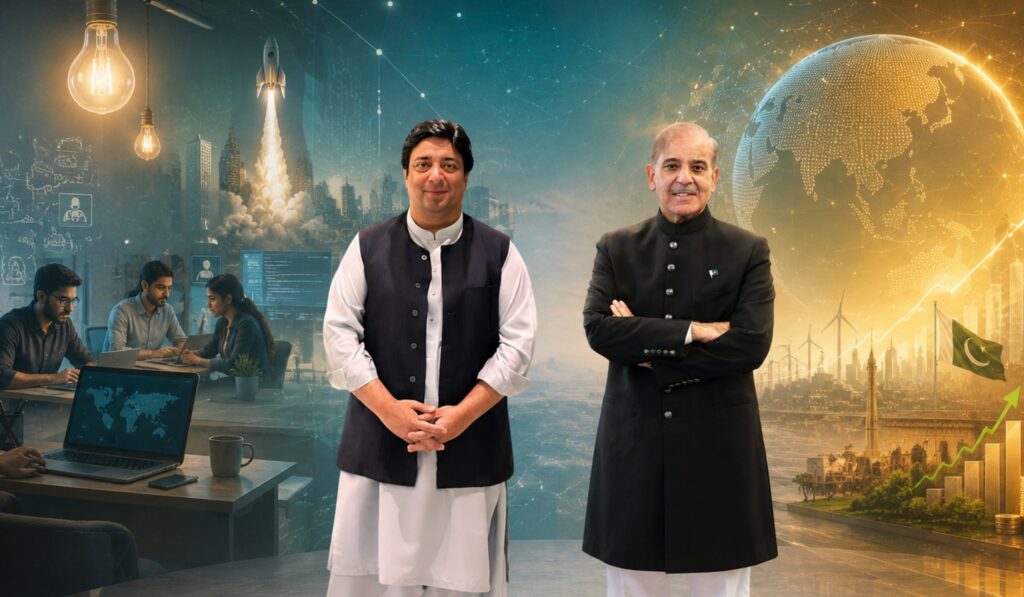
Pakistan Is Entering a New Economic Era
Pakistan stands at a defining moment in its economic journey. The country is witnessing a powerful shift from traditional employment models toward a future driven by technology, entrepreneurship, digital skills, and innovation. What was once considered an alternative career path has now become a mainstream opportunity for millions of young Pakistanis.
From freelancing and remote work to startup development and artificial intelligence, a new economic ecosystem is emerging. Initiatives such as “Startups of Tomorrow” by Hisham Sarwar and the Prime Minister’s “Skills of Tomorrow” program highlight a growing national focus on preparing youth for a digital-first future.
The question now is no longer whether Pakistan can participate in the global digital economy. The real question is: What comes next after startups and skills?
Pakistan’s Digital Economy Is Expanding Faster Than Ever
Over the last decade, internet access, digital platforms, and online learning have transformed how Pakistanis work and earn.
Young professionals are no longer limited to conventional career choices. Today, they can:
- Build online businesses
- Work remotely for international companies
- Launch technology startups
- Sell digital products globally
- Offer freelance services
- Create personal brands online
This transformation has fueled the rapid growth of Pakistan’s digital economy. Platforms such as Upwork, Fiverr, LinkedIn, and global remote-job marketplaces have enabled talented individuals to connect directly with international opportunities.
As a result, skills are increasingly becoming more valuable than geographical location.
“Startups of Tomorrow” Is Creating a New Generation of Founders
Entrepreneurship is becoming one of the strongest pillars of Pakistan’s economic future.
Through the Startups of Tomorrow initiative, aspiring entrepreneurs are encouraged to transform innovative ideas into scalable businesses. Participants develop startup pitch decks and present their concepts to gain exposure, mentorship, and growth opportunities.
The initiative promotes:
- Startup culture
- Innovation-driven thinking
- Problem-solving
- Business development
- Technology adoption
- Youth empowerment
Most importantly, it encourages Pakistanis to become job creators rather than job seekers.
The country’s startup ecosystem has already produced promising ventures in fintech, e-commerce, healthtech, logistics, agritech, and edtech. These businesses are solving local challenges while building products capable of competing internationally.
Skills of Tomorrow: Preparing Pakistan for the Future Workforce
While startups create economic opportunities, skills create economic readiness.
The Prime Minister’s Skills of Tomorrow initiative recognizes a critical global reality: employers increasingly prioritize practical expertise over traditional credentials.
The modern workforce demands capabilities that can immediately contribute to business growth and innovation.
Some of the most sought-after skills include:
- Digital marketing
- Search Engine Optimization (SEO)
- Web development
- Graphic design
- Cybersecurity
- Data analytics
- Video editing
- E-commerce management
- Artificial Intelligence tools
- Content creation
These competencies allow young Pakistanis to earn online, secure remote jobs, launch businesses, and access international markets without leaving their hometowns.
In many cases, a highly skilled individual can now generate greater economic value than someone relying solely on a traditional degree.
Why Skills Have Become the New Economic Currency
The global economy is undergoing a massive transformation.
Employers increasingly seek professionals who can adapt quickly, solve problems, communicate effectively, and leverage technology.
Modern organizations prioritize:
- Technical expertise
- Innovation
- Creativity
- Critical thinking
- Digital literacy
- AI knowledge
- Business adaptability
Countries investing heavily in workforce development are positioning themselves for long-term economic success. Pakistan has a unique advantage because more than half of its population consists of young people.
If this demographic is equipped with future-ready skills, Pakistan can emerge as a leading supplier of global digital talent.
Artificial Intelligence Could Become Pakistan’s Biggest Opportunity
The next phase of digital transformation is being driven by Artificial Intelligence.
AI is reshaping industries worldwide by automating repetitive tasks, improving decision-making, enhancing customer experiences, and increasing productivity.
Businesses are already utilizing:
- Generative AI
- Machine learning
- Predictive analytics
- Intelligent automation
- AI-powered customer support
- Data-driven business intelligence
Young Pakistanis are increasingly exploring:
- Prompt engineering
- AI content creation
- Automation platforms
- AI-assisted software development
- Machine learning fundamentals
The growing interest in AI demonstrates that Pakistan’s workforce is willing to embrace emerging technologies.
However, long-term success will require strategic investment in education, research, infrastructure, and technology training.
The Rise of the Creator Economy
Another major trend shaping Pakistan’s future is the creator economy.
Content creators, educators, consultants, podcasters, and influencers are becoming independent digital entrepreneurs. Through platforms such as YouTube, LinkedIn, TikTok, Instagram, and subscription-based communities, creators can build sustainable businesses around their expertise.
This shift is creating new income streams through:
- Digital courses
- Brand partnerships
- Consulting services
- Membership communities
- Sponsored content
- Affiliate marketing
For many young Pakistanis, content creation is no longer a hobby—it is a legitimate business model.
Pakistan’s Next Big Opportunity: Building Digital Products
While freelancing has helped many Pakistanis access global markets, the next stage of growth may come from creating digital products.
Instead of selling time, entrepreneurs can build:
- SaaS platforms
- Mobile applications
- AI-powered tools
- Online marketplaces
- Subscription services
- Educational technology platforms
Digital products offer scalability, recurring revenue, and international market access.
Countries that successfully transition from service providers to product creators often achieve stronger economic growth and higher global competitiveness.
Challenges That Still Need Attention
Despite encouraging progress, several barriers continue to slow Pakistan’s digital advancement.
Outdated Educational Models
Many institutions still emphasize theory over practical technology skills.
Limited Awareness
Students often lack guidance regarding freelancing, entrepreneurship, AI, and digital career pathways.
Infrastructure Gaps
Reliable internet connectivity remains inconsistent in various regions.
Funding Constraints
Many promising startups struggle to secure investment, mentorship, and business support.
Cultural Resistance
Some families continue to favor traditional career paths despite growing opportunities in technology and entrepreneurship.
Addressing these challenges will be essential for sustaining long-term digital growth.
What Could Come After Startups and Skills?
Pakistan’s next economic chapter may be defined by five major movements:
AI Entrepreneurship
Businesses built around automation, machine learning, and intelligent solutions.
Global Remote Workforce
Pakistan becoming a leading hub for international remote talent.
SaaS Innovation
Locally developed software products serving global customers.
Creator-Led Businesses
Independent professionals building digital-first companies.
Technology Education Platforms
New learning ecosystems focused on future-ready skills and workforce development.
Together, these sectors could significantly accelerate Pakistan’s digital economy over the coming decade.
The Future Is Being Built Online
The most exciting aspect of Pakistan’s transformation is accessibility.
Today, a laptop, internet connection, and determination can unlock opportunities that were unimaginable just a few years ago.
Young Pakistanis can:
- Learn globally relevant skills
- Build startups
- Earn in foreign currencies
- Develop digital products
- Work with international clients
- Create technology-driven businesses
The future economy will not be built solely in factories or corporate offices. It will increasingly emerge through digital platforms, AI-powered tools, innovative startups, and globally competitive talent.
Conclusion
The transition from Startups of Tomorrow to Skills of Tomorrow represents more than two initiatives—it reflects a broader transformation reshaping Pakistan’s future.
Entrepreneurship is encouraging innovation. Skills development is preparing the workforce. Artificial Intelligence is opening new possibilities. The creator economy is redefining careers. Together, these forces are laying the foundation for a knowledge-based economy driven by technology, creativity, and digital excellence.
Pakistan’s greatest asset remains its youth. If equipped with the right skills, tools, and opportunities, this generation has the potential to position Pakistan as a major player in the global digital economy.
The future is no longer something to wait for. It is already being built—one skill, one startup, and one innovation at a time. The source of this news is TechinPakistan.