Leaders

it-ministry-announces-major-ai-workforce-training-and-infrastructure-push-ceo-com
Leaders

“Pakistan Targets $15B Tech Exports: 1 Million AI Workforce Plan Unveiled at Paklaunch UNconference 2026”

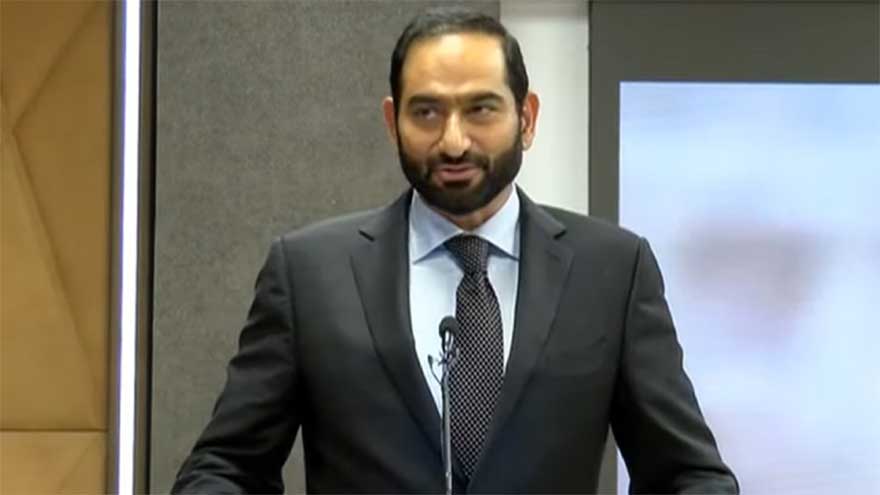
Pakistan’s tech ecosystem is entering a defining phase. At the Paklaunch UNconference 2026, the government revealed an ambitious roadmap: train one million people in artificial intelligence (AI) and push IT exports to $15 billion. Unlike traditional conferences, this event focused on real conversations—bringing founders, investors, and policymakers to the same table. The announcement signals a shift toward AI-driven growth, digital exports, and startup scalability in Pakistan. Policy Direction: From Vision to Execution Federal Minister Shaza Fatima Khawaja outlined the government’s approach with clarity. Instead of generic promises, she highlighted specific gaps, realistic targets, and ongoing reforms. The strategy revolves around three pillars: This structured direction aligns with global trends in digital transformation, machine learning adoption, and knowledge economies. The Core Challenge: Lack of Computing Power A major bottleneck discussed at the event was Pakistan’s limited computing infrastructure. Currently, most startups depend on foreign cloud platforms for: While this works, it creates challenges like high costs, limited control, and slower innovation cycles. The government plans to address this by: Without this foundation, even the best AI talent cannot scale effectively. This makes infrastructure a critical enabler of Pakistan’s AI ecosystem. 1 Million AI Workforce: Opportunity vs Execution The headline goal—training one million AI professionals—is bold and attention-grabbing. Pakistan already has: However, scaling talent comes with risks. Key Concerns: To succeed, the plan must include: Without this, the initiative risks becoming a numbers game rather than a skill revolution. $15 Billion IT Export Target: A Bold Leap Pakistan’s current IT exports stand at approximately $3.8 billion. The new target of $15 billion reflects a major strategic shift. But growth won’t come from outsourcing alone. Future Growth Drivers: This transition from service-based to product-based economy is essential for long-term success in the global tech market. Regulatory Hurdles: A Barrier to Growth Policy challenges remain a key concern for IT exporters. The government is working with the State Bank of Pakistan and Special Investment Facilitation Council to improve regulations. One major focus is revising Form M, a compliance requirement affecting international payments. Current Issues: Resolving these bottlenecks can significantly improve: Paklaunch: Bridging Startups & Global Capital Paklaunch continues to play a crucial role in connecting Pakistani founders with international investors, especially the diaspora. The UNconference format emphasized: While deals may not happen instantly, this model strengthens Pakistan’s startup funding ecosystem. Global Competition: The Pressure Is Real Pakistan is not alone in the AI race. Countries like: are rapidly expanding their tech exports and AI capabilities. To stay competitive, Pakistan must focus on: Final Takeaway: A Promising but Challenging Road Ahead The announcements at the Paklaunch UNconference 2026 reflect a clear shift toward AI, digital exports, and innovation-led growth. However, success depends on execution: If implemented effectively, Pakistan can strengthen its position in the global AI and tech economy—not overnight, but steadily. The Source of this news is TechinPakistan. For startups, CEOs, and tech leaders, this is a moment to watch closely. Stay ahead with the latest insights on Pakistan’s tech, startup, and digital economy trends at www.ceo.com.pk.
techpakistan-ceo-com
Leaders, News

Pakistan Breaks Free from Big Tech: Landmark PDA–DFINITY Deal Launches Sovereign Cloud & AI Future

Pakistan has taken a decisive leap toward digital sovereignty. In a groundbreaking move, the Pakistan Digital Authority (PDA) has signed a strategic Memorandum of Understanding (MoU) with the DFINITY Foundation—the force behind the Internet Computer Protocol (ICP). This partnership signals a bold shift: Pakistan is building its own AI-powered, tamper-proof digital infrastructure—independent of foreign cloud giants. 🚀 Why This MoU Is a Turning Point For years, Pakistan’s digital ecosystem has relied heavily on global platforms like AWS, Google Cloud, and Microsoft Azure. While powerful, these systems come with risks: This MoU changes the equation. 👉 Pakistan is now moving toward a sovereign cloud ecosystem, where data, AI systems, and digital services remain under national control. 🔐 What Is Sovereign Cloud & Why It Matters A sovereign cloud ensures that: With AI becoming data-hungry and geopolitics shaping tech access, this shift is not optional—it’s strategic. 🧩 Key Components of the PDA–DFINITY Partnership 🖥️ 1. Pakistan Subnet on ICP (Sovereign Cloud Layer) Pakistan will get its own dedicated subnet on the Internet Computer Protocol. This means: 👉 A tamper-proof digital backbone for government and enterprise systems. 🤖 2. 1,500 AI Licenses via “Caffeine” The partnership includes access to 1,500 Caffeine AI licenses—a next-gen platform that allows users to build apps using natural language. This enables: 👉 Democratizing innovation across Pakistan’s tech ecosystem. 💬 3. National Secure Messaging App (Pilot) A privacy-first, verifiable messaging platform will be developed for government use. Key features: 👉 Potential to evolve into a national secure communication system. 🎓 4. Local Presence & Skill Development The DFINITY Foundation plans to establish a local presence in Pakistan. This includes: 👉 Building local talent and technical expertise in blockchain and AI. 🌐 Impact on Pakistan’s Startup Ecosystem This partnership could be a game-changer for startups in: 🔑 Key Advantages for Founders 1. Lower Costs & Faster Development With AI tools like Caffeine, startups can build without heavy infrastructure costs. 2. Data Control & Compliance Local hosting ensures compliance with data protection laws and builds user trust. 3. Global Scalability ICP’s high-performance network allows apps to scale globally without relying on foreign cloud providers. 4. Increased Funding Opportunities Government-backed initiatives attract international investors and visibility. 👉 Early adopters could become leaders in sovereign AI applications. 📊 Why Pakistan Is Ready for This Shift Pakistan’s digital landscape is rapidly evolving: Combined with initiatives like Indus AI Week, the country is aligning toward AI-led economic growth. ⚖️ Challenges to Watch While promising, execution will define success. Key risks include: 👉 Technology alone isn’t enough—ecosystem activation is critical. 🧠 Strategic Insight for CEO.com.pk Readers This MoU is more than a tech deal—it’s a national strategy shift. Pakistan is signaling: For founders and tech leaders, the opportunity is clear: 👉 Build early on sovereign platforms👉 Leverage AI tools for rapid innovation👉 Align with government-backed ecosystems 🚀 Final Verdict: A Defining Moment for Pakistan’s Digital Future The partnership between the Pakistan Digital Authority and the DFINITY Foundation could mark the beginning of a new digital era. The source of this news is Strtup. If executed effectively, it can: If not, it risks becoming another missed opportunity. 🔥 CEO.com.pk Takeaway Digital sovereignty is no longer a concept—it’s a necessity. Pakistan has taken the first bold step. Now the real challenge begins: 👉 Can we build, scale, and lead—or will we fall behind again?

Global-ai-summit-news
Leaders

Who Is Winning the Global Tech Race? A Deep Dive into China–US AI Leadership

The global race for technological dominance has intensified—and the spotlight is firmly on China and the United States. What began as a competition in innovation has now transformed into a full-scale contest of power, infrastructure, and strategy. Recent developments suggest that China may be pulling ahead, redefining the dynamics of global tech leadership. China’s Rapid Rise in AI Research and Innovation Nvidia CEO Jensen Huang stunned the tech world when he admitted that China is only “nanoseconds behind America” in artificial intelligence. Many experts, however, believe Beijing has already moved ahead. Greg Slabaugh of Queen Mary University highlighted that half of the research papers presented at the 2025 International Conference on Computer Vision were authored by Chinese researchers—far surpassing the US. Studies further show China now leads in 57 out of 64 critical technologies, from quantum computing to robotics, marking a massive shift from two decades ago. This rise is powered by a deep research ecosystem and long-term national strategies that integrate talent, infrastructure, and policy. Powering the Future: China’s Energy Advantage AI requires massive computing power—and that means massive electricity. While US tech giants struggle with grid limitations and regulatory hurdles, China is building energy-optimized AI hubs across Inner Mongolia, Sichuan, and beyond. Subsidised energy, swift execution, and unified planning have given Beijing a structural edge that the US cannot currently match. The Open-Source Explosion: China’s New Strategic Weapon As American companies push closed, commercial AI models, China has embraced open-source innovation. Firms like DeepSeek, Moonshot, Z.ai, and MiniMax are releasing high-performance models at unmatched affordability. Chinese open-weight downloads have now overtaken those from the US. This shift has real-world implications: global companies—including Airbnb—are already replacing US AI tools with faster and cheaper Chinese alternatives. Dominance Beyond AI: Remote Sensing, EVs, and Renewables China’s technological lead stretches far beyond AI. In remote sensing, it now produces nearly half of global research output. In automobiles, Chinese EV makers like BYD and Leapmotor are outpacing European and American competitors. In renewable energy, Chinese wind turbine manufacturers dominate the top global rankings. The Road Ahead While the US still holds advantages in biotechnology, aerospace, and high-end AI, it faces a shifting global landscape. Experts argue that Washington must invest heavily in energy, research, and education—because China’s rise is no longer a forecast; it’s a reality already reshaping global tech value chains.

Sir-Anwar_pervaiz-pakistan
Leaders

Sir Anwar Pervez – The Visionary Founder of Bestway Group

Sir Anwar Pervez stands among the most influential Pakistani-born business leaders in the world. From a humble childhood in rural Punjab to building one of the UK’s largest business empires, his journey is a remarkable example of determination, hard work, and entrepreneurial foresight. From Punjab to the UK – A Journey of Resilience Born on March 15, 1935, in a small village in Punjab, Sir Anwar Pervez grew up with limited resources but limitless ambition. In 1956, he migrated to the United Kingdom in search of better opportunities. His early years were far from glamorous—he worked long hours in a Bradford bakery before securing a job at an accounting firm in London. These experiences shaped his discipline and taught him the value of financial management, eventually fueling his desire to start his own business. The Beginning of Bestway – A Small Shop to a Giant Empire Sir Anwar’s entrepreneurial journey began in 1963 when he opened a small convenience store in Earls Court, London. This modest shop laid the foundation of what would eventually become the Bestway Group. In 1976, he launched Bestway Cash & Carry, marking a turning point in his career. What started as a single warehouse transformed into one of the UK’s largest cash-and-carry chains, with more than 60 stores nationwide. Over time, the Bestway Group expanded into multiple sectors, including: Today, Bestway stands tall as a multi-billion-pound conglomerate and one of the most successful businesses founded by a British-Pakistani entrepreneur. Honors, Recognition & A Legacy of Excellence Sir Anwar Pervez’s contributions to business and society have earned him widespread respect. In 1992, he received the Order of the British Empire (OBE), and in 1999, he was knighted for his exceptional contributions to UK industry. His company later earned the Queen’s Award for Enterprise in 2013 for excellence in international trade. A Philanthropist at Heart Beyond business, Sir Anwar is deeply committed to humanitarian work. Through the Bestway Foundation, he has supported education, healthcare, disaster relief, and community development in both Pakistan and the UK. His philanthropic footprint continues to grow, helping thousands of people every year. Despite his success, Sir Anwar Pervez remains a private, humble individual—letting his achievements and impact speak for him.

Mian-Amir-Mehmood-Pakistan
Leaders

Mian Amer Mahmood – The Visionary Behind Pakistan’s Largest Education Empire

Mian Amer Mahmood stands among Pakistan’s most influential business leaders, known for reshaping the country’s private education sector and building a diversified business portfolio. With ventures spanning education, media, distribution, and philanthropy, his journey reflects ambition, innovation, and long-term national impact. A Self-Made Leader Who Transformed Education Born in Lahore in 1960, Mian Amer Mahmood began his career with a mission to make quality education accessible. After completing his MBA from Punjab University, he chose entrepreneurship over corporate roles, stepping directly into Pakistan’s underserved education sector. In 1985, he launched the Punjab College of Commerce, a modest initiative that eventually grew into the Punjab Group of Colleges (PGC)—now the largest private education network in Pakistan. Over the years, he expanded into specialized fields by establishing institutions like Punjab Law College, Punjab College of Business Administration, and Punjab Institute of Computer Science. His vision culminated in major universities such as the University of Central Punjab, Capital University of Science & Technology, and Mohammad Ali Jinnah University. Today, these institutions collectively educate tens of thousands of students annually. Building a Multi-Sector Business Empire While education remains his core strength, Mian Amer Mahmood strategically diversified across multiple industries. His media venture, Dunya News, launched in 2008, rapidly became one of Pakistan’s leading current affairs channels. It expanded later into Roznama Dunya and Lahore News, strengthening his position in the media landscape. Beyond media, his portfolio involves distribution networks under the Mian Group of Companies, bakery chains like DOCE, and export operations including Himalayan salt products. These ventures—combined with decades of educational leadership—contribute to his growing financial influence. Net Worth and Influence in 2025 Analysts estimate that Mian Amer Mahmood’s total net worth in 2025 stands at approximately Rs. 2 billion, built through sustainable business growth rather than inherited wealth. While he may not fall among Pakistan’s top billionaires, his self-made success story sets him apart as a transformative figure. His contributions to education earned him Pakistan’s prestigious Hilal-e-Imtiaz award, recognizing his national impact on youth development and academic accessibility. A Legacy Extending Beyond Business Despite criticism and challenges over the years, Mian Amer Mahmood’s philanthropic initiatives—especially scholarships and support for underprivileged students—highlight his commitment to social upliftment. With his son now contributing to the family businesses, the legacy of the Mahmood family continues to expand across sectors. Conclusion From a single college in 1985 to a nationwide network shaping the lives of millions, Mian Amer Mahmood’s rise reflects strategic thinking, resilience, and vision. His influence on Pakistan’s education and media sectors makes him one of the country’s most impactful business leaders—and a powerful example of self-made success.

Scroll to Top