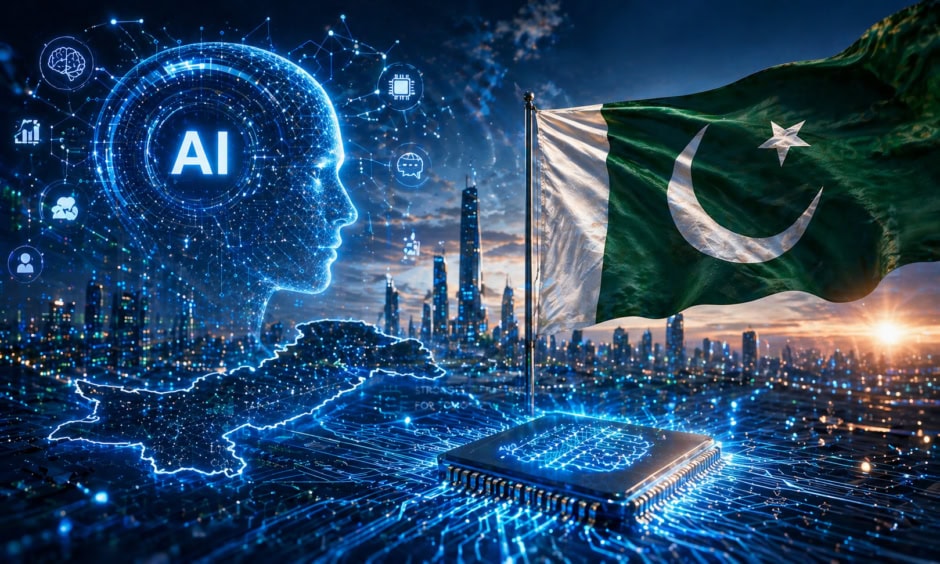
Pakistan’s tech ecosystem is entering a defining phase. At the Paklaunch UNconference 2026, the government revealed an ambitious roadmap: train one million people in artificial intelligence (AI) and push IT exports to $15 billion. Unlike traditional conferences, this event focused on real conversations—bringing founders, investors, and policymakers to the same table.
The announcement signals a shift toward AI-driven growth, digital exports, and startup scalability in Pakistan.
Policy Direction: From Vision to Execution
Federal Minister Shaza Fatima Khawaja outlined the government’s approach with clarity. Instead of generic promises, she highlighted specific gaps, realistic targets, and ongoing reforms.
The strategy revolves around three pillars:
- Building AI infrastructure in Pakistan
- Expanding skilled workforce capacity
- Increasing tech export revenue
This structured direction aligns with global trends in digital transformation, machine learning adoption, and knowledge economies.
The Core Challenge: Lack of Computing Power
A major bottleneck discussed at the event was Pakistan’s limited computing infrastructure.
Currently, most startups depend on foreign cloud platforms for:
- Machine learning model training
- AI testing and deployment
- Data processing at scale
While this works, it creates challenges like high costs, limited control, and slower innovation cycles.
The government plans to address this by:
- Importing high-performance GPUs
- Developing local data centers
- Strengthening cloud and AI infrastructure
Without this foundation, even the best AI talent cannot scale effectively. This makes infrastructure a critical enabler of Pakistan’s AI ecosystem.
1 Million AI Workforce: Opportunity vs Execution
The headline goal—training one million AI professionals—is bold and attention-grabbing.
Pakistan already has:
- A large freelancer base
- Growing exposure to AI tools, automation, and data labeling
- Increasing interest in machine learning and generative AI
However, scaling talent comes with risks.
Key Concerns:
- Short courses may produce certifications, not real skills
- Industry requirements may not align with training programs
- Quality control remains uncertain
To succeed, the plan must include:
- Industry collaboration
- Updated, market-relevant curricula
- Hands-on learning and project-based training
Without this, the initiative risks becoming a numbers game rather than a skill revolution.
$15 Billion IT Export Target: A Bold Leap
Pakistan’s current IT exports stand at approximately $3.8 billion. The new target of $15 billion reflects a major strategic shift.
But growth won’t come from outsourcing alone.
Future Growth Drivers:
- SaaS (Software as a Service) platforms
- Scalable tech products
- Subscription-based digital tools
- Global startup expansion
This transition from service-based to product-based economy is essential for long-term success in the global tech market.
Regulatory Hurdles: A Barrier to Growth
Policy challenges remain a key concern for IT exporters. The government is working with the State Bank of Pakistan and Special Investment Facilitation Council to improve regulations.
One major focus is revising Form M, a compliance requirement affecting international payments.
Current Issues:
- Payment delays
- Complex compliance procedures
- Limited financial flexibility
Resolving these bottlenecks can significantly improve:
- Ease of doing business in Pakistan
- Export efficiency
- Investor confidence
Paklaunch: Bridging Startups & Global Capital
Paklaunch continues to play a crucial role in connecting Pakistani founders with international investors, especially the diaspora.
The UNconference format emphasized:
- Direct founder-investor interaction
- Real-time feedback and collaboration
- Long-term relationship building
While deals may not happen instantly, this model strengthens Pakistan’s startup funding ecosystem.
Global Competition: The Pressure Is Real
Pakistan is not alone in the AI race. Countries like:
- India
- Vietnam
- Philippines
are rapidly expanding their tech exports and AI capabilities.
To stay competitive, Pakistan must focus on:
- Policy consistency
- Infrastructure development
- High-quality talent production
Final Takeaway: A Promising but Challenging Road Ahead
The announcements at the Paklaunch UNconference 2026 reflect a clear shift toward AI, digital exports, and innovation-led growth.
However, success depends on execution:
- Infrastructure will take years to build
- Training programs need continuous improvement
- Export growth requires global competitiveness
If implemented effectively, Pakistan can strengthen its position in the global AI and tech economy—not overnight, but steadily. The Source of this news is TechinPakistan.
For startups, CEOs, and tech leaders, this is a moment to watch closely.
Stay ahead with the latest insights on Pakistan’s tech, startup, and digital economy trends at www.ceo.com.pk.