Technology News

Public-Libraries
News, Technology News

Punjab Launches Rs50 Million Firewall Security Plan for Public Libraries: Major Step Toward Cyber-Safe Digital Education in Pakistan

The Government of Punjab has taken a significant step toward strengthening digital safety by approving a Rs50 million firewall security project for 14 public libraries across the province. This initiative aims to modernize library IT systems, improve cybersecurity protection, and ensure safe access to educational digital content for students and researchers. This move reflects Pakistan’s growing focus on cybersecurity infrastructure, digital governance, and secure public sector IT systems, especially in educational environments. Punjab’s Digital Security Upgrade for Public Libraries Under this newly approved plan, advanced firewall systems will be installed in selected public libraries across Punjab. The project has already received formal approval from all relevant regulatory bodies and is being fast-tracked for implementation. The goal is to create a secure digital learning environment where users can access only verified academic and research-based content. Key objectives include: This initiative marks an important shift toward smart library systems in Pakistan’s public sector. How Firewall Systems Will Improve Library Cybersecurity The installed firewall technology will act as a digital security barrier between users and external threats. It will filter internet traffic and ensure only approved educational resources are accessible within library networks. Expected Benefits of Firewall Implementation Officials confirmed that the firewall will also restrict access to content considered inappropriate for educational environments, ensuring a more focused digital learning ecosystem. Strengthening Pakistan’s Digital Infrastructure in Education This project is part of Punjab’s broader strategy to modernize public sector digital infrastructure. With increasing dependence on online learning and digital research tools, libraries are being transformed into digitally secure knowledge hubs. Experts believe this initiative will: Rising Cyber Threats Prompt National Security Advisory Alongside this provincial initiative, the National Cyber Emergency Response Team (NCERT) has issued a cybersecurity advisory warning federal institutions to adopt stronger protective measures. The advisory recommends placing official government websites in “read-only mode” during high-risk cyber threat periods to prevent unauthorized changes or attacks. Key Cyber Risks Identified by NCERT NCERT emphasized that cyber attackers often target: Recommended Cybersecurity Measures for Government Systems To reduce cyber risk exposure, NCERT has advised institutions to: Cybersecurity experts warn that increasing hacktivist activity and digital warfare risks require Pakistan to continuously upgrade its cyber defense mechanisms. Why This Matters for Pakistan’s Digital Future The Punjab firewall project and NCERT advisory highlight a larger national shift toward cyber resilience, digital governance, and IT security modernization. For Pakistan’s evolving digital economy, especially in education and public services, these steps are crucial to: Final Insight Punjab’s Rs50 million firewall initiative is more than just a technical upgrade—it is a strategic investment in digital safety, educational cybersecurity, and smart governance infrastructure. As Pakistan continues its digital transformation journey, such initiatives will play a key role in shaping a safer, smarter, and more secure online ecosystem for students, researchers, and public institutions. The Source of this news is Tech Juice. For continuous updates on Pakistan’s tech, governance, and startup ecosystem, visit ceo.com.pk.

5g-pakistan-ceo-com
News, Technology News

Pakistan’s Spectrum Crisis: The Silent Bottleneck Slowing Down the Digital Economy

Pakistan’s digital growth story is at a critical turning point—and at the center of it lies a problem few outside the telecom sector fully understand: spectrum scarcity. As the country prepares for its long-awaited spectrum auction, this moment could redefine the future of connectivity, innovation, and the broader tech ecosystem. What Is Spectrum and Why It Matters More Than Ever Spectrum refers to the radio frequencies that telecom operators use to deliver mobile services—calls, internet, and data. It’s a limited national resource, and without enough of it, even the most advanced infrastructure cannot deliver fast or reliable connectivity. In Pakistan, the issue is clear: This imbalance has quietly slowed down everything from startup growth to AI adoption, making spectrum one of the most important yet overlooked components of the digital economy. The Real Problem: A Capacity Crunch Pakistan’s telecom networks are approaching their limits, especially in major cities like Karachi, Lahore, and Islamabad. Users experience this daily through: For startups, freelancers, and digital businesses, this is more than an inconvenience—it’s a growth barrier. Global insights, including warnings from industry bodies like GSMA, highlight that delays in releasing spectrum can cost economies billions in lost productivity and innovation. The 2026 Spectrum Auction: A Make-or-Break Moment After years of delays, Pakistan is finally moving toward a major spectrum auction scheduled for March 2026. What’s on the table? This is expected to be the largest spectrum release in Pakistan’s history. Why This Auction Is Bigger Than Just 5G While many see this auction as a step toward 5G, its impact goes much deeper: 1. Immediate 4G Improvement Additional spectrum will reduce congestion and improve current network performance. 2. Foundation for Future Tech From AI-driven services to fintech platforms, better connectivity is essential for scaling innovation. 3. Startup Ecosystem Boost Reliable internet is the backbone of: Without it, growth remains limited. Challenges That Could Make or Break the Outcome Despite the opportunity, several risks remain: High Costs for Operators Telecom companies have raised concerns about: In a low-revenue market, these factors could discourage aggressive bidding. Policy and Regulatory Uncertainty Investors and operators need clarity on: Without consistency, even new spectrum may not translate into rapid deployment. Infrastructure Gaps Beyond Spectrum Spectrum alone isn’t enough. Pakistan still needs: Without these, the full benefits of the auction may remain unrealized. Key Telecom Players and the Competitive Shift Major telecom operators—including Jazz, Zong, Telenor, and Ufone—are entering a defining phase. The outcome of this auction will determine: For smaller players, it may become a balancing act between growth and financial sustainability. Why Startups and Tech Founders Should Care For Pakistan’s startup ecosystem, spectrum is not a telecom issue—it’s a business survival issue. Better connectivity means: In a world where visibility and execution define success, poor internet infrastructure can quietly kill even the best ideas. The Bigger Picture: Fixing a Structural Weakness This auction is not just about launching a new generation of mobile technology. It is about fixing a long-standing structural gap in Pakistan’s digital infrastructure. If executed correctly, it can: If mishandled, it risks continuing a cycle of: Final Thoughts: A Defining Moment for Pakistan’s Digital Future Pakistan stands at a crossroads. The March 2026 spectrum auction is more than a policy event—it’s a strategic decision that will shape the country’s digital economy for the next decade. The real question is not whether Pakistan can afford to release more spectrum. It’s whether it can afford not to get this right. For founders, investors, and policymakers alike, the message is clear:Connectivity is no longer infrastructure—it’s the foundation of competitiveness.

indus-ai-week-ceo-com
News, Technology News

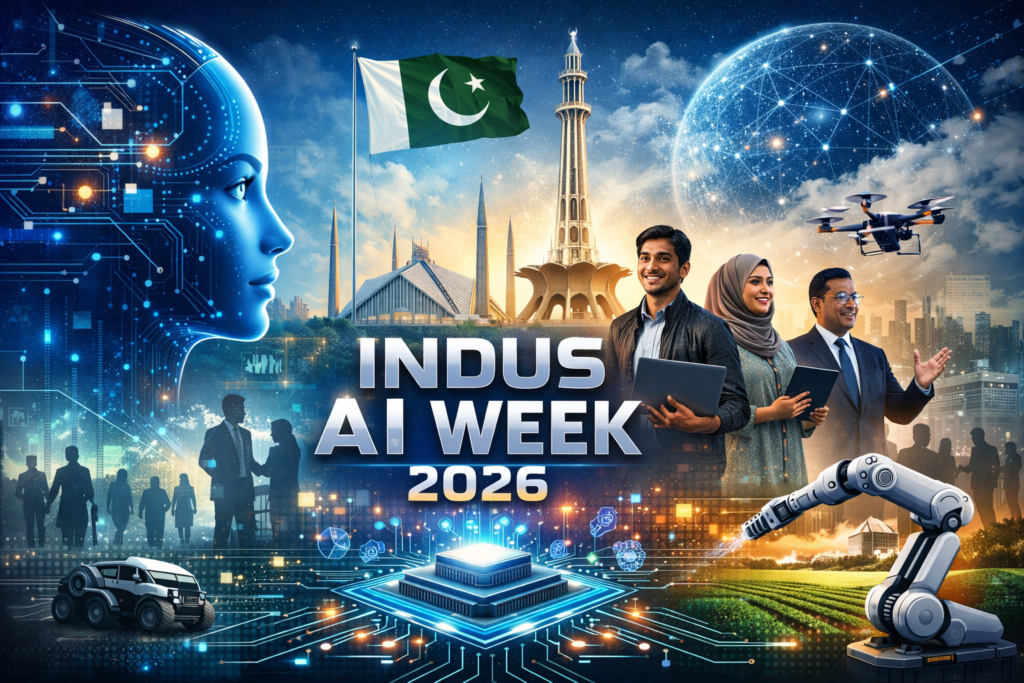
Indus AI Week 2026: Pakistan’s Breakthrough Moment as AI Moves from Vision to Reality

Pakistan is stepping into a new digital era—and Indus AI Week 2026 marks the moment when artificial intelligence in the country shifts from ambition to real execution. This isn’t just another tech event. It’s a nationwide AI movement designed to accelerate innovation, empower startups, and position Pakistan in the global AI economy. For founders, developers, investors, and policymakers, this is a defining opportunity. 🚀 What Is Indus AI Week 2026? Indus AI Week 2026 is a week-long national initiative (Feb 9–15, 2026) led by the Ministry of IT & Telecommunication (MoITT). It brings together: 🎯 Core Objectives 👉 The goal is simple: turn AI conversations into scalable solutions. 🌟 Flagship Events Driving the AI Ecosystem 🏛️ Indus AI Summit (Feb 9 – Islamabad) The Indus AI Summit at Jinnah Convention Center serves as the strategic backbone of the week. Key Focus Areas: 👉 This is where Pakistan defines its AI roadmap and digital future. 💡 AI Expo & Innovation Arena (Feb 9–10) Hosted at the Islamabad Sports Complex, this is the most interactive part of the event. 🔍 What You’ll See: 👉 Perfect for discovering real AI use cases in Pakistan. 🧠 Uraan AI Techathon 1.0 A high-impact innovation challenge where: build AI-driven solutions for real-world problems. 👉 Winning here can boost startup credibility and investor interest. 🎓 AI Training & Certification Programs Skill-building sessions designed for: 👉 Focus on AI education, upskilling, and workforce readiness. 💼 Jobs & Talent Fair Connecting: with: 👉 A major boost for Pakistan’s tech talent ecosystem. 👩‍💼 AI For Her Initiative A dedicated platform to: 👉 Driving inclusive innovation in Pakistan’s AI space. 🌍 Nationwide Participation: Beyond Islamabad One of the strongest aspects of Indus AI Week is its decentralized approach. Across Pakistan, you’ll see: 🎯 Who Benefits? 👉 This ensures AI adoption reaches every layer of the ecosystem. 📈 Why Indus AI Week 2026 Matters for Startups For startups in Pakistan, this is more than exposure—it’s a growth catalyst. 🚀 Key Benefits 👉 AI is no longer optional. It’s becoming the foundation of scalable startups. 🌐 A Strategic Step Toward Global Recognition Indus AI Week 2026 is also about reshaping Pakistan’s global tech narrative. At a time when global AI leadership is concentrated in a few countries, Pakistan is signaling: 👉 This strengthens Pakistan’s position in the global digital economy. 🔥 The Bigger Picture: From Fragmentation to Coordination Pakistan’s AI efforts have long been scattered. Indus AI Week changes that by creating: 👉 It’s the beginning of a coordinated national AI strategy. 🚀 Final Take: A Defining Moment for Pakistan’s Future Indus AI Week 2026 is not just an event—it’s a turning point. The source of this news is Startup. It reflects a bold shift toward: 📌 For Founders & Builders This is your moment to: 💡 Conclusion Pakistan has the talent, the ideas, and the market potential to thrive in the AI era. Indus AI Week 2026 provides the platform to turn that potential into real impact. The message is clear: The future belongs to those who don’t just talk about AI—but build with it. 👉 Stay updated with the latest startup, AI, and tech insights on www.ceo.com.pk — your gateway to Pakistan’s innovation economy.

wef-davous-ceo-com
News, Technology News

Davos 2026 Wake-Up Call: What Pakistan’s Startups Must Learn to Win the Global AI Economy

The World Economic Forum (WEF) Davos 2026 delivered a powerful message: the global AI race has entered a new phase. It’s no longer about ideas or hype—it’s about execution, discipline, and real economic impact. For Pakistan’s startup and AI ecosystem, this moment is critical. The world is watching, but only those who are ready to scale responsibly will attract capital, partnerships, and global relevance. Here’s a clear, founder-focused breakdown of what Davos 2026 means for Pakistan. 🚀 AI Is No Longer a Feature—It’s Core Infrastructure At Davos 2026, artificial intelligence was not treated as innovation—it was discussed as essential infrastructure, just like cloud computing or cybersecurity. 🔍 What This Means for Pakistani Startups 👉 Startups must show how AI improves: SEO Insight: AI adoption in Pakistan, AI startups Pakistan, scalable AI solutions 📌 Bottom line: If your AI doesn’t directly impact outcomes, it won’t matter. 📉 Emerging Markets Face Tougher Filters Global investors have changed how they view markets like Pakistan. The narrative has shifted from “high potential” to “prove it.” 🔑 What Investors Now Expect Gone are the days when population size or market promise could win investor interest alone. 👉 Pakistani startups must focus on: LSI Keywords: startup funding Pakistan, venture capital Pakistan, investor readiness 🧠 The Real AI Gap: Leadership, Not Talent Davos revealed a surprising truth: AI projects fail more due to leadership gaps than technical issues. Pakistan has: ⚠️ The Missing Link 👉 Startups must invest in: NLP Terms: AI product development, AI strategy, digital leadership Pakistan 🔐 Responsible AI = Global Market Access One of the strongest signals from WEF 2026: Responsible AI is no longer optional—it’s mandatory. 🌍 Why It Matters Global markets now demand: For Pakistani startups, especially in: 👉 This is a competitive advantage opportunity, not just a compliance burden. SEO Keywords: responsible AI Pakistan, data governance, ethical AI 🎯 Vertical AI Is Winning Big Investors are shifting away from broad AI platforms to focused, industry-specific solutions. 📊 Where Pakistan Has an Edge 👉 Instead of building general tools, focus on: LSI Terms: vertical AI startups, industry-specific AI, SME solutions Pakistan 💰 Capital Still Exists—But It’s Selective Despite global uncertainty, funding hasn’t disappeared—it has become smarter. 🔍 What Investors Want Now 👉 Good news for Pakistan: Local startups already operate in resource-constrained environments, making them naturally efficient. SEO Keywords: startup investment trends 2026, funding challenges Pakistan 👀 Visibility Opens Doors—Execution Closes Deals Davos proved that global exposure matters—but only to a point. 📌 Reality Check for Founders To convert interest into funding, startups need: 👉 Without execution, visibility is just noise. 🇵🇰 The Big Takeaway for Pakistan’s Startup Ecosystem Pakistan stands at a defining crossroads in the global AI economy. 🌟 Strengths ⚠️ Challenges 🔥 Final Verdict: Preparedness Will Decide Everything Davos 2026 made one thing crystal clear: The world is no longer betting on potential. It is rewarding preparedness. For Pakistani founders, this means: 🚀 Conclusion: From Potential to Power Pakistan has everything it needs to succeed in the AI-driven global economy: But success will depend on one factor: discipline in execution. If these lessons from Davos are applied, Pakistan can move from being a promising ecosystem to a globally competitive startup hub. 👉 Stay ahead with the latest insights on startups, AI, and funding at www.ceo.com.pk — your source for Pakistan’s digital future.

Scroll to Top