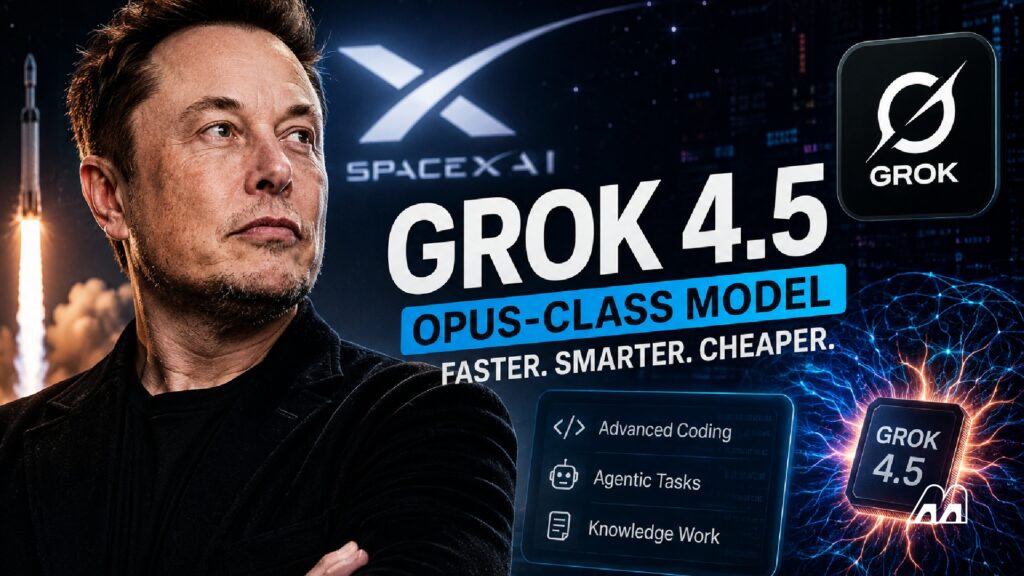
Grok-4.5-launches-as-Musk-pushes-cheaper-Opus-class-AI
News

SpaceXAI Unveils Grok 4.5: Elon Musk Says New ‘Opus-Class’ AI Model Is Built for Enterprise, Coding, and Advanced Reasoning

SpaceXAI Introduces Grok 4.5 to Strengthen Its AI Leadership SpaceXAI has officially launched Grok 4.5, the latest version of its flagship artificial intelligence (AI) model and the company’s first major AI release since becoming a publicly traded business. The announcement marks another significant milestone in the rapidly evolving AI industry, where technology companies are racing to build faster, smarter, and more efficient large language models (LLMs). CEO Elon Musk described Grok 4.5 as an “Opus-class” AI model, highlighting its ability to compete with some of the world’s most advanced AI systems while delivering improved speed, performance, and efficiency for professional users. What Makes Grok 4.5 Different? According to SpaceXAI, Grok 4.5 has been engineered to handle demanding enterprise workloads with greater accuracy and reliability. The upgraded model focuses on advanced reasoning, software development, automation, and AI-powered decision-making. The latest AI system is optimized for: These improvements position Grok 4.5 as a powerful productivity tool for developers, enterprises, startups, and technology teams seeking AI-driven workflow automation. Built for Enterprise AI Applications Unlike consumer-focused chatbots, Grok 4.5 is designed with enterprise users in mind. SpaceXAI says the model performs better during extended technical tasks, allowing businesses to automate repetitive processes while improving operational efficiency. Organizations working in software development, fintech, legal technology, cybersecurity, research, and digital transformation can potentially benefit from the model’s enhanced capabilities. The growing demand for enterprise AI solutions reflects a broader shift toward AI-powered automation across industries worldwide. Competitive Pricing Targets Businesses and Developers Beyond performance upgrades, SpaceXAI is also positioning Grok 4.5 as a cost-effective solution. The company says the new model offers competitive pricing for developers and enterprises looking for advanced AI without paying premium subscription costs associated with rival platforms. By combining high-end AI capabilities with affordable pricing, SpaceXAI aims to attract startups, software companies, and corporate customers searching for scalable AI infrastructure. Competition in the AI Market Continues to Intensify The launch of Grok 4.5 comes as competition among AI companies reaches new heights. Major technology firms are investing billions of dollars in developing next-generation large language models (LLMs) capable of handling coding, automation, natural language processing (NLP), machine learning, and intelligent business workflows. SpaceXAI’s latest release signals its intention to compete directly with established AI leaders by focusing on speed, efficiency, enterprise productivity, and developer-focused innovation. As AI adoption accelerates globally, businesses are increasingly evaluating models based on performance, scalability, security, pricing, and real-world usability. Why Grok 4.5 Matters for Pakistan’s Startup Ecosystem For Pakistan’s growing technology ecosystem, the launch of Grok 4.5 could create new opportunities for startups, software houses, freelancers, and AI-driven businesses. Pakistani developers and IT companies are increasingly integrating AI into software development, customer support, digital marketing, fintech, healthcare, and business automation. Access to faster and more affordable enterprise-grade AI models could help local businesses improve productivity, reduce operational costs, and compete in international markets. With Pakistan’s expanding freelance economy and digital transformation initiatives, advanced AI tools are becoming essential for building globally competitive products and services. The Future of Enterprise AI Artificial intelligence is rapidly becoming a core business technology rather than an experimental tool. Companies are now adopting AI for intelligent automation, predictive analytics, software engineering, workflow optimization, and strategic decision-making. As AI models continue evolving, the competition will likely center on delivering greater accuracy, lower latency, enhanced security, and better value for enterprise customers. Final Thoughts The launch of Grok 4.5 demonstrates SpaceXAI’s growing ambition to become a major force in the global AI industry. With enhanced capabilities for coding, advanced reasoning, autonomous agents, and enterprise automation, the new model is positioned to meet the rising demand for professional AI solutions. For businesses, developers, and startups in Pakistan and around the world, Grok 4.5 represents another step toward an AI-powered future where intelligent automation, software innovation, and enterprise productivity play an increasingly central role in digital transformation. The Source of this news is TechinPakistan.


Smart Cities in Pakistan
News

Smart Cities in Pakistan: Is the Nation Ready for an AI-Powered Urban Future?

Pakistan’s Smart City Vision Is Closer Than Ever Pakistan is undergoing a rapid digital transformation. From digital banking and e-governance to AI-powered services and expanding broadband connectivity, technology is reshaping how citizens live and work. As urban populations continue to grow, the concept of smart cities in Pakistan is gaining momentum. However, building a smart city is about much more than installing surveillance cameras or offering public Wi-Fi. It requires advanced digital infrastructure, intelligent governance, cybersecurity, sustainable planning, and public-private collaboration. The key question remains: Is Pakistan ready to embrace smart cities? What Is a Smart City? A smart city uses technologies such as Artificial Intelligence (AI), the Internet of Things (IoT), cloud computing, big data, and 5G to improve urban life and optimize public services. Common smart city solutions include: These technologies help cities become more efficient, sustainable, and citizen-centric while reducing operational costs. Why Pakistan Needs Smart Cities Pakistan’s major cities—including Karachi, Lahore, Islamabad, Rawalpindi, Faisalabad, and Peshawar—face increasing pressure from rapid urbanization. Challenges include: Smart technologies can help governments improve urban planning, reduce congestion, enhance emergency response, and deliver better public services through real-time data and automation. Pakistan Has Already Taken Important Steps Although fully integrated smart cities are still evolving, Pakistan has already laid the groundwork through several digital initiatives. Safe City Projects Cities such as Islamabad and Lahore have introduced Safe City systems that combine surveillance cameras, command centers, and AI-assisted monitoring to improve public safety and emergency response. Digital Government Services Government departments continue expanding e-governance initiatives, allowing citizens to access many services online while reducing paperwork and improving efficiency. Digital Payments and Fintech The rapid growth of Raast, mobile banking, and digital wallets has accelerated Pakistan’s transition toward a digital economy. These financial innovations form an essential building block for future smart city ecosystems. Technologies Powering Smart Cities Several emerging technologies will define Pakistan’s urban future. Artificial Intelligence (AI) AI enables governments to analyze massive datasets, optimize traffic flow, improve public safety, forecast infrastructure needs, and enhance city planning. Internet of Things (IoT) IoT devices collect real-time information using connected sensors. Applications include: 5G Connectivity Future smart city infrastructure depends on high-speed, low-latency networks that support millions of connected devices simultaneously. Cloud Computing Cloud platforms allow governments to securely store, process, and analyze city-wide data while delivering faster digital services to citizens. Challenges Pakistan Must Address Despite promising progress, several obstacles remain. Infrastructure Gaps Reliable electricity, high-speed internet, and modern transport infrastructure are essential for smart city development. Investment Requirements Building smart infrastructure demands significant funding. Public-private partnerships, foreign investment, and startup participation will play an important role. Digital Literacy Technology adoption depends on people. Expanding digital education and improving technology skills remain priorities for nationwide implementation. Cybersecurity Risks As cities become increasingly connected, protecting digital infrastructure from cyberattacks becomes critical. Governments must strengthen cybersecurity frameworks and continuously monitor digital systems. What Pakistan Can Learn From Global Smart Cities Leading smart cities provide valuable lessons. Rather than copying these models, Pakistan can adapt similar technologies based on local priorities and economic realities. Startups Will Drive Urban Innovation Pakistan’s startup ecosystem is already developing solutions that support smart city transformation. Growing innovation areas include: With greater investment, incubation programs, and supportive government policies, startups can accelerate digital innovation while creating high-value jobs. Universities Must Become Innovation Hubs Higher education institutions can play a vital role by advancing research in: Stronger collaboration between universities, government agencies, and private companies can produce locally developed smart city technologies tailored for Pakistan. Is Pakistan Ready for Smart Cities? The answer is partly yes. Pakistan has already established several key foundations, including digital payments, expanding broadband access, Safe City initiatives, e-governance, and a rapidly growing technology sector. However, achieving truly intelligent cities requires long-term investment, stronger cybersecurity, better digital literacy, sustainable infrastructure, and consistent public policy. Final Thoughts Smart cities are not simply about adopting advanced technology—they are about creating safer, greener, more connected, and economically competitive urban environments. With continued investment in AI, IoT, digital governance, fintech, and startup innovation, Pakistan has the potential to transform its urban landscape over the coming decade. The journey may take time, but the opportunity to build smarter cities that improve quality of life and strengthen the national economy has never been greater. The Source of this news is TechinPakistan.

U.S.-Merchants-See-Surge-in-Contactless-Payments
News

The Future of Online Payments Is Cardless: How AI, Digital Wallets, and QR Payments Are Redefining Commerce

Why Plastic Cards Are Losing Their Dominance For decades, debit and credit cards have powered online shopping, bill payments, and digital subscriptions. Entering a 16-digit card number has become second nature for millions of consumers. However, the global payments industry is entering a new era where cardless payments are replacing traditional checkout experiences. Powered by artificial intelligence (AI), digital wallets, QR codes, biometric authentication, tokenization, and open banking, the next generation of online payments promises faster, safer, and more seamless transactions. For Pakistan’s growing fintech ecosystem, startups, banks, and e-commerce businesses, this transformation presents significant opportunities for innovation. Digital Wallets Are Becoming the Preferred Payment Method Digital wallets are rapidly changing how consumers pay online and in stores. Solutions like Apple Pay, Google Wallet, and Samsung Wallet allow users to complete transactions without carrying physical cards. Instead of exposing card details, these platforms securely store encrypted payment credentials. Users simply authenticate using: The result is a faster checkout experience with enhanced security and improved customer convenience. Tokenization Makes Online Payments More Secure One of the biggest innovations behind modern payment systems is tokenization. Rather than transmitting an actual card number during every purchase, payment providers generate a unique encrypted token for each transaction. Even if hackers intercept the token, it cannot be reused elsewhere. Tokenization offers several advantages: Banks and fintech companies worldwide are increasingly adopting tokenized payment infrastructure. Biometric Authentication Is Replacing Passwords The future of digital payments relies less on passwords and more on identity verification. Modern smartphones already support advanced biometric technologies such as: These technologies simplify the payment process while making unauthorized transactions significantly more difficult. For consumers, biometrics eliminate the need to remember multiple passwords or repeatedly enter CVV codes during checkout. Open Banking Is Transforming Digital Transactions Open banking is reshaping financial services by enabling customers to make direct account-to-account (A2A) payments through secure banking APIs. Instead of relying on traditional card networks, consumers can authorize transactions directly from their banking applications. Key benefits include: As financial institutions modernize their digital infrastructure, open banking is expected to play an increasingly important role in Pakistan’s fintech landscape. QR Payments Continue to Expand Across Pakistan QR code payments have become one of the fastest-growing digital payment methods worldwide. Consumers simply scan a merchant’s QR code using a banking app or digital wallet to complete purchases instantly. Countries including Pakistan, India, China, and Singapore have witnessed rapid adoption due to QR payments being: With initiatives promoting financial inclusion and cashless commerce, QR-based payments are becoming increasingly common across Pakistan. Artificial Intelligence Is Making Payments Smarter Artificial intelligence is transforming payment systems behind the scenes. Financial institutions now use AI to: Machine learning algorithms continuously analyze transaction patterns, helping banks reduce fraud while minimizing false payment declines. Smart Devices Are Becoming Payment Platforms The rise of the Internet of Things (IoT) is turning everyday connected devices into payment tools. Consumers can now make purchases using: Future innovations could allow smart appliances to place orders automatically or electric vehicles to pay charging stations without requiring cards or manual input. Invisible Security Is the Future of Payments Next-generation payment systems aim to improve security without adding complexity. Instead of repeatedly requesting passwords and verification codes, future payment platforms will rely on: This creates a payment experience where legitimate users enjoy faster checkouts while fraudulent activities are automatically identified and blocked. What This Means for Pakistan’s Digital Economy Pakistan’s rapid fintech growth, expanding e-commerce market, and increasing smartphone adoption are accelerating the shift toward cardless digital payments. For startups, banks, retailers, and technology companies, embracing secure payment technologies will improve customer trust, reduce fraud, and support financial inclusion. Businesses that invest early in AI-powered payment infrastructure and digital payment innovation will be better positioned to compete in the evolving digital economy. Final Thoughts The future of online payments isn’t simply cashless—it’s cardless. Digital wallets, biometric authentication, tokenization, QR payments, open banking, and AI are reshaping how consumers and businesses exchange money. As Pakistan continues its digital transformation, adopting these next-generation payment technologies will be essential for driving innovation, improving cybersecurity, and delivering seamless customer experiences in the years ahead. The Source of this news is TechinPakistan.

Your Digital Footprint Could Be Worth Millions
News

Your Digital Footprint Could Be Worth Millions: Who Owns Your Online Data in the AI Era

Every search, online purchase, social media post, and website visit leaves behind valuable information known as your digital footprint. While many internet users believe they are simply browsing or shopping online, the reality is that their data powers a global digital economy worth billions of dollars. Technology companies, advertisers, AI developers, and data analytics firms rely on user data to improve products, personalize experiences, and generate revenue. As artificial intelligence (AI) continues to transform industries, personal data has become one of the world’s most valuable digital assets. For business leaders, startups, and entrepreneurs in Pakistan, understanding data ownership, digital privacy, and AI-driven business models is becoming essential. What Is a Digital Footprint? A digital footprint is the collection of information created whenever you interact online. It generally falls into two categories: Active Digital Footprint This includes information you intentionally share, such as: Passive Digital Footprint This data is collected automatically while you browse the internet, including: Together, this information helps companies build detailed user profiles that improve personalization and recommendation systems. Why Is Personal Data So Valuable? Data has become the foundation of today’s digital business models. Most online platforms offer free services because they monetize user information through targeted advertising, customer insights, and AI-powered analytics. Businesses can better understand consumer behavior, predict purchasing decisions, and optimize marketing campaigns using real-time data. Research from global consulting firms consistently shows that data-driven personalization improves customer engagement, conversion rates, and long-term business growth. For startups, quality data has become a competitive advantage that fuels innovation. Who Collects Your Online Data? Data collection extends far beyond social media platforms. Your information may be gathered by: Many websites also use cookies, tracking pixels, and analytics tools to monitor user activity across multiple platforms. The Hidden Business of Data Brokers One of the least visible players in the digital economy is the data broker industry. Data brokers collect information from numerous public and commercial sources, combine it into detailed consumer profiles, and sell insights to businesses, marketers, insurers, and researchers. These profiles may include: Most internet users remain unaware that their information may exist in multiple commercial databases. AI Has Made Data More Valuable Than Ever Artificial intelligence has significantly increased the value of personal data. Modern AI systems—including large language models (LLMs), recommendation engines, voice assistants, and generative AI platforms—require massive datasets for training and continuous improvement. Every interaction helps AI systems become more accurate, making high-quality data one of the most sought-after resources in the technology industry. Global technology companies continue investing billions of dollars in AI infrastructure because better data leads to smarter algorithms and stronger business outcomes. Can You Really Own Your Data? Data ownership has become one of the biggest legal and ethical debates in technology. Privacy regulations such as the European Union’s General Data Protection Regulation (GDPR) have introduced stronger rights, allowing users to access, correct, and request deletion of personal information. Many countries, including Pakistan, are also strengthening digital privacy frameworks as AI adoption accelerates. The future of digital ownership will likely balance innovation, business growth, and individual privacy rights. Should Users Be Paid for Their Data? A growing number of technology startups believe users should receive financial rewards for sharing anonymized personal data. Supporters argue that individuals generate the information powering today’s AI and advertising economy and therefore deserve compensation. Critics, however, warn that turning personal data into a tradable asset could increase privacy risks and encourage excessive surveillance. Although the debate continues, data monetization is emerging as an important topic for businesses, regulators, and consumers alike. Practical Ways to Protect Your Digital Footprint Protecting your online privacy doesn’t require leaving the internet entirely. Instead, adopt smarter digital habits: Small cybersecurity practices can significantly reduce unnecessary data exposure. Why Digital Literacy Matters More Than Ever As AI reshapes business, healthcare, finance, education, and government services, personal information is becoming a strategic economic asset. Emerging technologies such as decentralized identity, blockchain-based data management, and privacy-enhancing solutions could redefine how individuals control their digital identities in the coming years. For entrepreneurs, executives, policymakers, and everyday internet users in Pakistan, understanding the value of digital data is no longer optional—it’s a business and cybersecurity necessity. Final Thoughts Your digital footprint is far more valuable than most people realize. Every online interaction contributes to a data ecosystem that powers artificial intelligence, digital advertising, and business intelligence worldwide. As the digital economy evolves, those who understand data privacy, cybersecurity, AI governance, and digital ownership will be better equipped to protect their information—and potentially benefit from it in the future.The Source of this news is TechinPakistan.
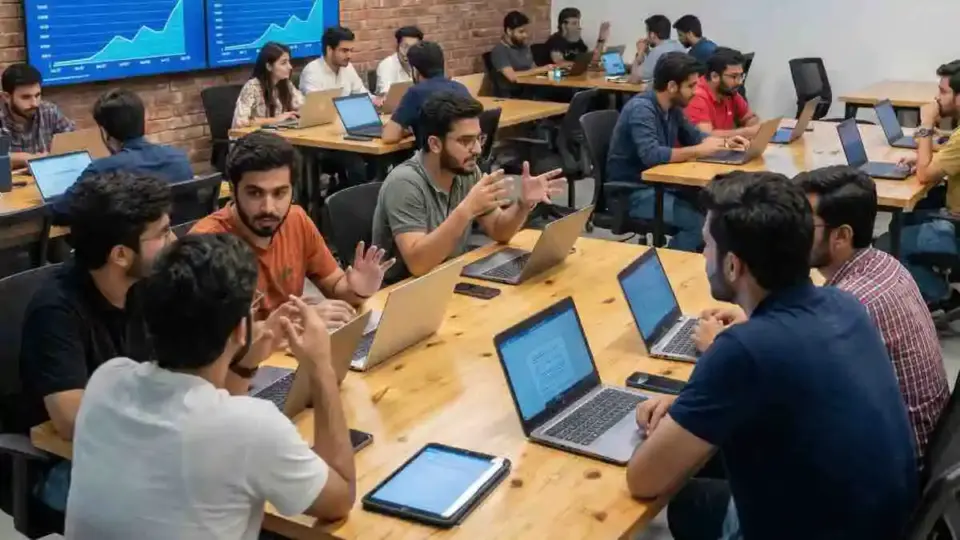
funded-ceo-pakistan
News

Bootstrapped vs Funded Startups in Pakistan: Which Business Model Delivers Greater Success?

Pakistan’s startup ecosystem has matured significantly over the past decade, giving entrepreneurs more choices than ever before. One of the biggest decisions every founder faces is whether to bootstrap a startup using personal resources or raise venture capital to accelerate growth. Both models have produced successful companies worldwide, but which approach works best in Pakistan’s evolving business landscape? The answer depends on your industry, growth strategy, capital requirements, and long-term vision. Pakistan’s Startup Ecosystem Is Evolving The country has witnessed rapid growth in fintech, SaaS, e-commerce, healthtech, edtech, logistics, and AI startups. Government initiatives, startup incubators, expanding internet access, and a growing pool of skilled technology professionals have created new opportunities for entrepreneurs. At the same time, changing global investment trends have encouraged many founders to focus on sustainable business models rather than chasing funding at any cost. What Is a Bootstrapped Startup? A bootstrapped startup is built using the founder’s savings, business revenue, or support from family and friends instead of external investors. Because financial resources are limited, founders prioritize: Successful global companies like Mailchimp and Basecamp proved that profitable businesses can grow without venture capital. Benefits of Bootstrapping Bootstrapping offers several advantages for Pakistani entrepreneurs. Complete Ownership Founders retain full control over business decisions without giving away equity. Strong Financial Discipline Limited budgets encourage efficient spending, lean operations, and sustainable growth. Focus on Profitability Instead of pursuing rapid expansion, bootstrapped startups prioritize paying customers and healthy cash flow. Long-Term Independence Without investor pressure, founders can make strategic decisions based on customer needs rather than short-term financial targets. Challenges of Bootstrapping Despite its benefits, bootstrapping also has limitations. Common challenges include: Businesses requiring heavy investment—such as AI infrastructure, fintech platforms, or deep-tech products—may struggle without external capital. What Is a Funded Startup? A funded startup raises capital from angel investors, venture capital firms, accelerators, or incubators. Funding allows entrepreneurs to: In addition to capital, investors often provide mentorship, strategic guidance, and valuable business connections. Advantages of Raising Investment External funding can significantly accelerate growth. Key benefits include: For startups targeting global markets, venture capital often provides the financial resources needed to compete internationally. The Downsides of Venture Capital Investment brings responsibility alongside opportunity. Founders typically face: Companies focused on steady profitability rather than aggressive expansion may find these trade-offs less attractive. Which Model Works Best in Pakistan? The ideal approach depends on the business model. Bootstrapping Is Suitable For: These businesses often generate revenue quickly with relatively low startup costs. Funding Is Better For: These sectors usually require substantial upfront investment before achieving profitability. Why More Founders Are Choosing Profitability First Following the global slowdown in venture capital investment, many Pakistani entrepreneurs have shifted their priorities. Instead of raising funding immediately, founders now focus on: Companies demonstrating consistent traction often secure investment later on stronger terms and higher valuations. Can Startups Combine Both Models? Many successful startups follow a hybrid strategy. They begin by bootstrapping to validate their product and acquire customers before raising external investment. This approach enables founders to: For many Pakistani startups, this balanced model offers the best combination of independence and growth. The Future of Startup Funding in Pakistan Pakistan’s startup ecosystem is moving beyond the “fundraising-first” mindset. Today, investors increasingly favor businesses with strong revenue, customer retention, scalable products, and clear paths to profitability. Whether founders choose bootstrapping or venture capital, success depends on solving real market problems, building innovative technology, and executing consistently. With expanding digital infrastructure, rising software exports, increasing AI adoption, and a growing entrepreneurial community, Pakistan offers enormous opportunities for startups following either path. Final Thoughts The debate isn’t about whether bootstrapping or venture funding is universally better—it’s about selecting the right strategy for your business goals. Bootstrapping offers ownership, financial discipline, and sustainable growth, while venture capital provides the resources needed for rapid scaling and international expansion. For many Pakistani entrepreneurs, the smartest path is to start lean, validate the business model, build recurring revenue, and seek investment only when it accelerates proven success. In Pakistan’s fast-growing startup ecosystem, disciplined execution—not funding alone—will determine which businesses become tomorrow’s industry leaders. The Source of this news is TechinPakistan.

Pakistani-Founders-Go-Global-ceo-pakistan
Startup's

Why Pakistani Startups Are Going Global Before Dominating the Local Market

Pakistan’s startup ecosystem is undergoing a major transformation. Instead of focusing solely on the domestic market, a growing number of Pakistani startups are adopting a global-first strategy, building products for international customers from day one. Whether it’s AI-powered software, SaaS platforms, fintech solutions, developer tools, or cybersecurity products, founders are targeting customers in North America, Europe, the Middle East, and Southeast Asia long before achieving large-scale adoption at home. This strategic shift is helping Pakistani entrepreneurs unlock larger markets, attract international investors, and generate higher recurring revenue while operating from Pakistan. Why the Global-First Mindset Is Growing A decade ago, most startups aimed to solve local challenges before considering expansion abroad. Today, technology has changed that equation. Cloud computing, remote work, AI tools, global payment platforms, and digital marketing have significantly reduced the barriers to international business. Founders now realize they are no longer limited by geography. A startup based in Lahore, Karachi, or Islamabad can serve enterprise customers in New York, London, Dubai, or Singapore with the same efficiency as companies headquartered there. Technology Has Removed Geographic Barriers Modern cloud infrastructure has made launching global products faster and more affordable. Platforms like Amazon Web Services (AWS) and Microsoft Azure enable startups to build scalable applications without investing in expensive physical infrastructure. Combined with remote collaboration tools, video conferencing, cloud-based development, and digital communication platforms, Pakistani startups can now manage global operations from anywhere. Instead of targeting only Pakistan’s population, founders can reach millions of businesses and consumers worldwide. Global Markets Offer Higher Revenue Potential One of the biggest reasons startups are expanding internationally is purchasing power. While Pakistan offers a large user base, businesses in developed economies generally have higher software and technology budgets. For example, a SaaS product priced at $30 per month may face adoption challenges locally but can be competitively priced for companies in the United States, Canada, or Europe. This allows startups to generate stronger recurring revenue while benefiting from Pakistan’s comparatively lower operating costs. Building Products for the World Today’s founders are increasingly solving universal business problems rather than creating products limited to one country. Pakistani startups are developing: By addressing global challenges, these companies significantly increase their Total Addressable Market (TAM), making them more attractive to venture capital firms and international investors. Pakistan’s Tech Talent Is Fueling Global Growth Pakistan has become one of the fastest-growing sources of skilled technology professionals. Every year, thousands of software engineers, AI specialists, UX designers, and product managers work with international companies, gaining valuable global experience. Many startup founders previously built careers as freelancers or remote professionals, giving them firsthand knowledge of international customer expectations, product quality standards, and global business practices. This experience helps them create products designed for worldwide markets from the very beginning. AI Is Accelerating International Expansion Artificial Intelligence has become a powerful growth engine for startups looking beyond Pakistan. AI tools now help founders: These technologies allow even small startup teams to compete globally without hiring large operational departments. Investors Prefer Startups With Global Ambitions Venture capital firms increasingly look for startups capable of serving international markets. Companies targeting multiple countries typically offer greater scalability, stronger revenue potential, and diversified business risk. A global customer base also improves investor confidence because the business becomes less dependent on a single economy. This is why many Pakistani founders now position international expansion at the center of their fundraising strategy. Remote Work Has Changed the Startup Playbook The rise of remote work has eliminated many traditional expansion costs. Pakistani startups no longer need expensive overseas offices to serve international clients. Sales meetings happen online, software is delivered digitally, and customer support operates remotely across different time zones. This flexible operating model enables startups to scale internationally while maintaining lean business operations. Challenges Still Remain Despite the opportunities, expanding globally is not without obstacles. Pakistani startups continue to face challenges such as: Success requires continuous investment in product quality, cybersecurity, customer support, and brand building. The Future Belongs to Global Pakistani Startups Pakistan’s startup ecosystem is entering an exciting new chapter. Instead of asking whether a product can succeed locally, many founders now ask whether it can solve problems for customers worldwide. With growing AI adoption, expanding software exports, world-class engineering talent, and improved digital infrastructure, Pakistan is becoming a competitive hub for innovation. The next generation of billion-dollar startups may not simply emerge from Pakistan—they may be built in Pakistan for the world. Entrepreneurs who embrace a global-first mindset today are positioning themselves to lead tomorrow’s digital economy while strengthening Pakistan’s reputation as a rising technology and startup powerhouse. The Source of this news is TechinPakistan.

fintech-pakistan-ceo-pakistan
News

The Future of Fintech Startups in Pakistan: How AI, Digital Payments, and Innovation Are Reshaping Financial Services

Pakistan’s fintech industry is entering a new era of growth, fueled by digital transformation, artificial intelligence (AI), smartphone adoption, and supportive financial regulations. As millions of Pakistanis embrace digital banking, mobile wallets, and cashless payments, fintech startups are unlocking new opportunities for entrepreneurs, investors, and businesses. From instant money transfers to AI-powered lending and financial management tools, Pakistan is rapidly becoming one of South Asia’s most promising fintech markets. While challenges such as cybersecurity and regulatory compliance remain, the sector’s long-term outlook is highly optimistic. Why Pakistan’s Fintech Industry Is Growing Rapidly Pakistan has a young, digitally connected population with rising internet penetration and increasing smartphone usage. At the same time, a significant portion of the population remains underserved by traditional banking services. This gap has created strong demand for fintech solutions that offer: Government initiatives promoting financial inclusion and digital payments have also accelerated fintech adoption, creating a favorable environment for startups. Digital Payments Are Driving Financial Inclusion Pakistan is steadily moving toward a cashless economy as consumers and businesses increasingly prefer digital transactions. Platforms such as Easypaisa, JazzCash, NayaPay, and SadaPay have transformed how people send money, pay utility bills, shop online, and receive salaries. Meanwhile, the Raast Instant Payment System has simplified bank-to-bank transfers by enabling real-time digital payments. This shift has opened new opportunities for startups building: Artificial Intelligence Is Revolutionizing Fintech Artificial Intelligence is becoming a key driver of innovation across Pakistan’s fintech ecosystem. Modern fintech startups are leveraging AI, machine learning, and data analytics to improve customer experience while strengthening security and operational efficiency. Common AI applications include: As AI technology continues to evolve, fintech companies will deliver faster, safer, and more intelligent financial services. Fintech Is Empowering Pakistan’s SMEs Small and Medium Enterprises (SMEs) contribute significantly to Pakistan’s economy, yet many still rely on manual financial processes. Fintech startups are helping businesses digitize operations through solutions such as: These technologies reduce paperwork, improve efficiency, and help businesses scale more effectively. Investor Confidence Continues to Grow Pakistan’s fintech ecosystem is attracting increasing attention from both local and international investors. Factors driving investment include: International development organizations are also supporting financial inclusion initiatives, encouraging innovation across digital financial services. As funding increases, startups will have greater opportunities to develop scalable fintech products for local and global markets. Challenges Facing Fintech Startups Despite strong growth potential, fintech entrepreneurs must overcome several obstacles. Regulatory Compliance Fintech companies must comply with strict Know Your Customer (KYC), Anti-Money Laundering (AML), and data protection requirements. Building trust through regulatory compliance remains essential for long-term success. Cybersecurity Risks As digital transactions grow, protecting customer data becomes increasingly important. Startups must invest in: Strong security measures help maintain customer confidence while minimizing financial risks. Financial Literacy Many Pakistanis are still unfamiliar with digital financial services. Fintech companies that educate users through simple onboarding, awareness campaigns, and user-friendly applications will likely see higher adoption rates and stronger customer loyalty. Emerging Opportunities for Entrepreneurs Pakistan’s fintech landscape offers significant opportunities beyond digital wallets. High-potential startup ideas include: With Pakistan’s growing freelance economy and expanding digital business ecosystem, innovative financial products remain in high demand. The Future of Fintech in Pakistan The future of fintech startups in Pakistan looks exceptionally promising. Collaboration between banks and fintech companies is expected to increase, creating smarter and more accessible financial services. Technologies such as Artificial Intelligence, cloud computing, blockchain, digital identity verification, and embedded finance will further accelerate innovation across the industry. As digital payments become mainstream and financial inclusion improves, Pakistan has the potential to emerge as one of South Asia’s leading fintech hubs. Final Thoughts Pakistan’s fintech revolution is transforming how individuals and businesses manage money. From AI-powered banking solutions and instant digital payments to SME financing and financial inclusion, startups are solving real-world challenges while driving economic growth. Although regulatory compliance, cybersecurity, and financial awareness remain important priorities, the opportunities far outweigh the risks. Entrepreneurs who develop secure, customer-focused, and technology-driven financial solutions will be well-positioned to shape Pakistan’s digital economy. For investors, founders, and policymakers alike, fintech represents one of the country’s most exciting growth sectors—and its best years are still ahead. The Source of this news is TechinPakistan.

pakistan_5g_skyline
News

Pakistan’s 5G Expansion Reaches 449 Active Tower Sites Across 22 Cities, But Nationwide Rollout Faces Challenges

Pakistan has taken another important step toward next-generation connectivity, with 449 active 5G telecom tower sites now operational across 22 cities. The latest update was shared by the Pakistan Telecommunication Authority (PTA) during a briefing to the National Assembly Standing Committee on Information Technology, highlighting the country’s ongoing efforts to accelerate digital transformation. While the expansion marks steady progress, officials cautioned that the current pace of deployment remains too slow to achieve nationwide 5G coverage in the near future. PTA Monitors 5G Network Performance Around the Clock According to PTA officials, the regulator is collecting network data from telecom operators every 24 hours to monitor service quality and identify tower sites that go offline. Continuous monitoring is aimed at improving network reliability and ensuring that operators maintain high service standards as the 5G infrastructure expands. The real-time tracking system is expected to help telecom companies address technical issues more efficiently while supporting a smoother rollout of next-generation mobile services. Uneven 5G Deployment Across Pakistan Despite the growing number of active sites, the distribution of 5G infrastructure remains uneven. Karachi currently has around 50 operational 5G tower sites, while Hyderabad has only three, highlighting the significant gap in network availability between major urban centers. PTA officials warned that if deployment continues at its current pace, Pakistan may not achieve nationwide 5G coverage until 2035. This timeline has raised concerns among policymakers and industry stakeholders, who believe faster infrastructure development is essential for the country’s digital future. Government Pushes Telecom Operators to Accelerate Rollout The government has urged telecom operators to speed up the installation of 5G infrastructure, particularly in large metropolitan areas where demand for high-speed mobile connectivity continues to grow. Expanding network coverage in densely populated cities is expected to improve internet performance for consumers while supporting businesses that rely on cloud computing, digital services, artificial intelligence, and data-driven technologies. Why 5G Matters for Pakistan’s Digital Economy The expansion of 5G networks is expected to unlock new opportunities across multiple industries. Faster mobile internet, lower latency, and improved network capacity can support innovations in smart cities, fintech, e-commerce, healthcare, education technology (EdTech), Industry 4.0, artificial intelligence (AI), Internet of Things (IoT), and cloud computing. For Pakistan’s startup ecosystem, improved connectivity can accelerate digital innovation, enable remote collaboration, and strengthen technology-driven businesses competing in regional and global markets. Challenges Ahead Although the number of active 5G sites continues to grow, industry experts believe Pakistan must significantly increase investment in telecom infrastructure, spectrum deployment, and network expansion to meet future demand. Close collaboration between regulators, telecom operators, and government institutions will be essential to ensure faster implementation and wider accessibility across urban and rural areas. Final Thoughts Pakistan’s activation of 449 live 5G tower sites across 22 cities represents meaningful progress toward a digitally connected future. However, the current rollout speed highlights the need for faster infrastructure development to avoid delays in nationwide adoption. As 5G becomes the foundation for emerging technologies and digital businesses, accelerating deployment will be critical for strengthening Pakistan’s digital economy, attracting technology investment, and enabling startups and enterprises to thrive in an increasingly connected world. The Source of this news is TechinPakistan.
LinkedIn Becomes the Most AI-Driven Social Platform
News

LinkedIn Emerges as the Most AI-Powered Social Platform, Study Finds 41% of Long Posts Are AI-Generated

Artificial intelligence is rapidly transforming the way professionals create content online, and LinkedIn is leading this shift. A new study by Pangram Labs, an AI detection company, reveals that LinkedIn now has the highest concentration of AI-generated content among major social media platforms. According to the report, nearly 41% of long-form LinkedIn posts are likely written entirely by artificial intelligence, highlighting how generative AI is reshaping professional networking. The findings underscore a growing trend as professionals, entrepreneurs, startup founders, and business leaders increasingly rely on AI writing tools to produce thought leadership articles, career updates, and industry insights. AI Is Changing Professional Content Creation Generative AI tools have become essential for many LinkedIn users looking to save time and improve the quality of their writing. From drafting business posts to refining company announcements, AI-powered assistants are helping professionals publish content faster than ever before. For startups and executives, AI can streamline content marketing, strengthen personal branding, and maintain a consistent publishing schedule. As a result, AI-generated content is becoming a common feature across the platform. Experts Warn About Losing Authenticity While AI offers significant productivity benefits, experts caution against relying too heavily on automated writing. The study suggests that excessive use of AI-generated posts could reduce authenticity and weaken genuine professional engagement. LinkedIn has traditionally been valued for sharing personal experiences, career milestones, leadership lessons, and original business perspectives. As AI-written content becomes more widespread, authentic storytelling and unique insights may become even more valuable for building trust and credibility. Why This Matters for Pakistani Startups and Business Leaders For Pakistan’s growing startup ecosystem, LinkedIn remains one of the most powerful platforms for networking with investors, clients, recruiters, and global partners. Founders increasingly use AI tools to create business updates, funding announcements, and industry commentary. However, experts recommend combining AI-assisted writing with personal expertise instead of publishing entirely machine-generated content. A balanced approach can help entrepreneurs maintain their professional identity while benefiting from AI-driven productivity. The Future of AI on LinkedIn The Pangram Labs report reflects a broader shift across the digital landscape, where AI writing assistants are becoming part of everyday content creation. As artificial intelligence continues to evolve, professionals will need to strike the right balance between efficiency and authenticity. Creating original insights, sharing real-world experiences, and adding a human perspective will remain essential for standing out in an increasingly AI-saturated feed. Final Thoughts LinkedIn’s rise as the most AI-driven social platform marks a new chapter in professional communication. While AI enables users to write faster and improve content quality, genuine expertise and authentic storytelling remain the foundation of meaningful professional relationships. For Pakistani entrepreneurs, startup founders, and corporate leaders, the smartest strategy is to use AI as a productivity tool—not a replacement for original thinking. In an era where AI-generated content is becoming the norm, a unique human voice may become the strongest competitive advantage. The Source of this news is TechinPakistan.

government-of-pakistan-unveils-landmark-programs-to-accelerate-startup-growth-under-the-prime-ministers-digital-nation-vision
News

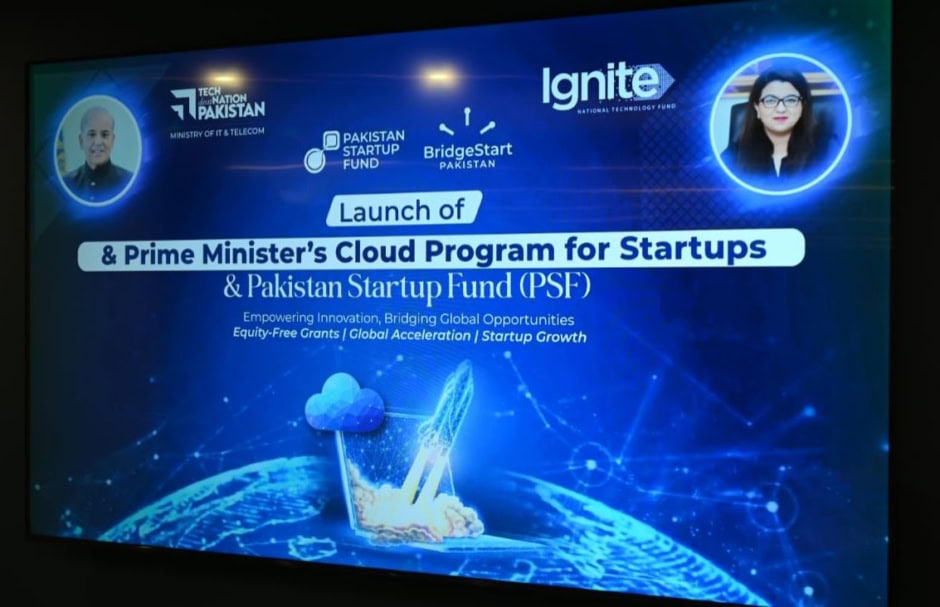
Pakistan Launches Prime Minister’s Cloud Program for Startups with Up to $13,500 Support

Pakistan has taken another step toward strengthening its startup ecosystem with the launch of the Prime Minister’s Cloud Program for Startups. Introduced by the Ministry of IT & Telecommunication in collaboration with Ignite – National Technology Fund, the initiative is designed to help technology startups reduce cloud infrastructure costs while accelerating innovation and business growth. The program offers up to $13,500 in cloud reimbursement for eligible Tier 1 and Tier 2 startups, giving entrepreneurs greater flexibility to build, scale, and manage their digital products more efficiently. Government Backs Startup Innovation with Cloud Funding Cloud infrastructure is one of the biggest operational expenses for startups developing software, AI solutions, SaaS platforms, fintech products, and digital services. Through this initiative, the government aims to ease that financial burden and encourage startups to invest more in product development and market expansion. Unlike many cloud support programs tied to a single provider, Pakistan’s initiative allows startups to choose their preferred Cloud Service Provider (CSP). This flexibility enables businesses to select the cloud platform that best aligns with their technical and operational needs. Expert Advisory to Strengthen Digital Businesses The Prime Minister’s Cloud Program goes beyond financial assistance. Selected startups will receive one-on-one advisory sessions with cloud experts who will help optimize cloud infrastructure, improve system performance, enhance scalability, and strengthen digital operations. This expert guidance can help startups adopt industry best practices, improve cost efficiency, and build reliable technology infrastructure capable of supporting long-term growth. Who Can Apply? The program is open to eligible Tier 1 and Tier 2 startups operating in Pakistan. Interested founders are encouraged to submit their applications through the official Ignite registration portal before the announced deadline. Eligible startups can also access detailed information about application requirements, reimbursement criteria, and program guidelines on Ignite’s official website. Boosting Pakistan’s Digital Economy The launch of the Prime Minister’s Cloud Program reflects Pakistan’s broader strategy to accelerate the digital economy, promote technology entrepreneurship, and create a more competitive startup environment. As cloud computing becomes the backbone of modern businesses, reducing infrastructure costs can help startups innovate faster, launch products more efficiently, and compete in regional and global markets. The initiative also supports emerging sectors such as artificial intelligence, fintech, e-commerce, cybersecurity, health tech, edtech, and software development. Why This Initiative Matters For early-stage startups, access to cloud resources often determines how quickly they can scale operations. By combining cloud reimbursement with technical mentorship, the government is providing founders with both financial support and strategic expertise. The program is expected to encourage innovation, improve digital adoption, and strengthen Pakistan’s growing technology ecosystem while creating new opportunities for entrepreneurs and investors. Final Thoughts The Prime Minister’s Cloud Program for Startups is a significant addition to Pakistan’s startup support landscape. With up to $13,500 in cloud reimbursement, expert advisory services, and the freedom to select any cloud service provider, the initiative offers practical support for startups looking to scale their businesses. As Pakistan continues investing in digital transformation, programs like this can help local startups build world-class products, attract investment, and expand into international markets, further positioning the country as an emerging technology and innovation hub. The Source of this news is TechinPakistan.

Scroll to Top